
Several weeks ago, I had an opportunity to reflect on how Open Science (OS) can transform Kenyan higher education in the Daily Nation, one of our leading newspapers. In this post, I focus on OS through the eyes of a theological educator. As the Director of Research and Innovation at St. Paul’s University and in my role as Project Coordinator for African Theology Worldwide, I see OS as an important undertaking for African theological education and research.
Think of a postgraduate theology student beginning her research project. African students often face barriers when trying to access African theological resources. Many institutions of higher education do not have sufficient financial resources to invest in good library collections. Even if the student is studying at an institution that has a well-stocked library, then she has to make her way there and do a search on the library system. Frequently she will find that the African theologians writing in her area may have produced some work on the topic, but their publications are inaccessible due to various kinds of paywalls. Many traditional publication channels, seeking to monetize their content, create barriers that are beyond the means of most African students. OS offers a way to remove some of these barriers.
Or think of a theologian sharing the results of his research. African theologians often face challenges when trying to publish with traditional university or academic publishers. First, publishers can charge high prices for the copy-editing, indexing and typesetting of a book. In other parts of the world, institutions provide funds to support the publication efforts of their academic staff; in Africa many institutions lack the financial resources to do this. Second, language barriers and Western publication paradigms inadvertently disfavour African theologians, the majority of whom work using languages such as English and French, which tend to be their second or third language. Third, the prevailing academic ranking and promotion systems discourage publication with local publishers. As a result, many African theologians publish their work with Western publishers, who may have a significant footprint in the West, but very scanty distribution networks in Africa. OS can help overcome some of these challenges.
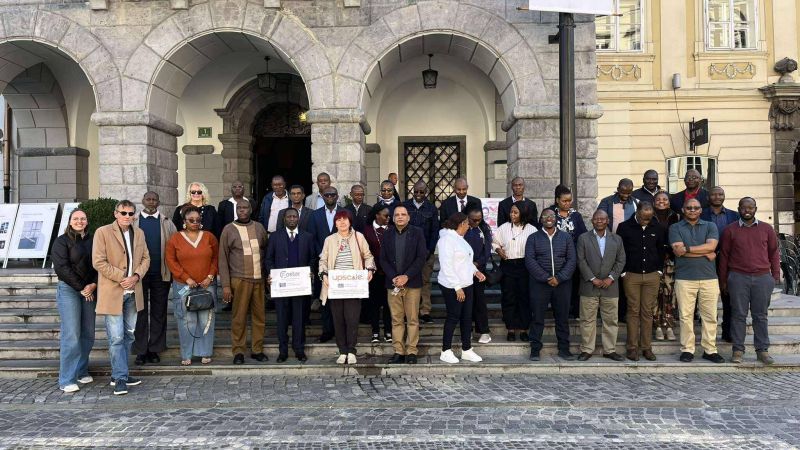
Since January 2025, I have been participating in the FOSTER project. FOSTER: Fostering Digital Transformation of Science in Kenya and Tanzania (Project Number: 101178078), is a three-year initiative co-funded by the European Union through the Erasmus+ Programme under the Capacity Building for Higher Education (CBHE) Action. The project brings together nine partners from Kenya, Tanzania, Slovenia, the Netherlands, and Spain, connecting higher education and research institutions to build a more open, collaborative, and innovative scientific future. The institutions include Daystar, St. Paul’s and Garissa Universities (Kenya), University of Dar Es Salaam and East and Southern African Management Institute (Tanzania), International School for Social and Business Studies (ISSBS) and European Policy Development Research Institute (EPDRI) (Slovenia), University of Zaragoza (Spain), and VU Amsterdam (Netherlands).
We aim to drive digital transformation in science and education in Kenya and Tanzania by advancing OS through better data infrastructure, inclusive research, citizen science, and digital inclusion. Our roadmap is guided by key OS principles: Open Access and Open Data (FAIR principles); Researcher training and support; Community engagement; Strong policy and infrastructure frameworks; and Collaboration across stakeholders and governments. The project has involved mobility visits, consortium meetings and public facing OS forums to exchange best practices. The aim is to explore strategies for strengthening OS policies in research and innovation, at both institutional and national levels. By bringing multi-sectoral leaders together, we hope to strengthen collaboration across higher education, government and industry.
OS can greatly benefit African theological education and research. First, for the postgraduate theology student, open access books and journals enable her to use cutting-edge theological resources in her research. Furthermore, by engaging with up-to-date and contextual resources produced by African theologians, she can significantly increase the impact of her research in her institution and in her community.
Second, for the theologian, OS policies can transform the ranking and promotion dynamics within his institution. Such policies would recognize and reward academic staff who publish on open access platforms. Promotion criteria could also incorporate citizen science engagement within research projects, thereby supporting African theologians who develop research projects in collaboration with and for a given community. The community in this context could be the church, and therefore research would be directly drawn from actual concerns that African churches face – such as climate change, water scarcity, flooding, food shortage, poverty and gender issues, just to name a few. While this has relevance for the church’s integral mission work, it can also feed into and transform the church’s ministry in its task of gospel proclamation. Churches would connect their pastoral work to the actual issues that their congregations are facing.
Third, OS contributes to the digital transformation of institutions of higher education. Where institutions may face infrastructure challenges, the project’s emphasis on OS policy development, infrastructure strengthening and institutional collaboration enables resources to be shared charitably across various institutions. With the right infrastructure, skilled librarians can become “data stewards,” serving a much wider community.
Fourth, OS emphasises the importance of engaging citizens in the “scientific” enterprise – right from the analysis of societal problems to the design, implementation and eventual dissemination of research projects – ensuring that theological research is not detached from the communities that it is meant to serve. This leads to a move away from the model of theological education as an ivory tower, thereby reinforcing the understanding that “everyone is a theologian.”
For me as a practical theologian committed to the lived realities of African churches and communities, this is central to my conviction that theology is more than the study of God. Theology is a shared enterprise of discerning what God is already doing in communities. OS therefore opens the capacity for theological education and research to be truly in service of the church and society, thereby truly safeguarding theology as “Queen of the Sciences.”
Rev. Kevin Muriithi Ndereba (PhD, University of South Africa) is a practical theologian, Presbyterian Minister and theological educator currently working as Director of Research and Innovation at St. Paul’s University. He is editor of the book Apologetics in Africa: An Introduction and author of Youth Ministry after the Pandemic: A Practical Theology from the Global South. A brief introduction to the subject of apologetics can be found here. A helpful article on emerging apologetic themes among African youth can be found here. He is the Project Coordinator for Anglophone Africa at Africa Theology Worldwide and participates in various theological networks, societies and journals. He recently concluded a Templeton-funded research project on youth and mental health in the Kenyan church. He can be contacted at
Photo Credit: Kevin Muriithi Ndereba